
Custom Instrument Workshop · Pacific Northwest
Built
to Your
Hands
Every joint, every fret, every voice — engineered for the player you already are.
Serving Portland · Seattle · San Francisco · By Appointment
23years
Building
340+
Instruments
0.1mm
Tolerance
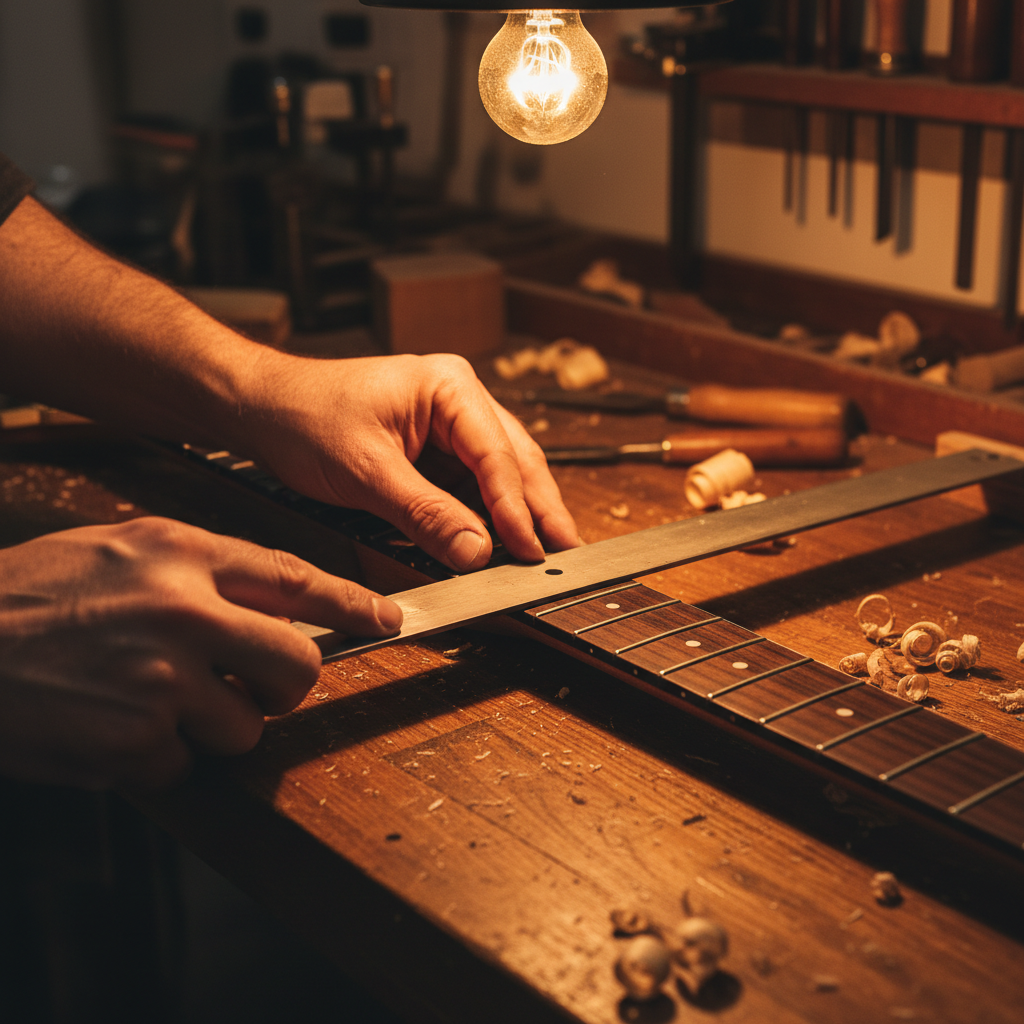
Workshop · Portland, OR
The Build Process
Five Stages.
No Shortcuts.
Each stage is documented. Each decision is defensible. This is engineering dressed in craft.
The Brief
Consultation
"I need to understand how you play before I touch a single piece of wood. Your attack, your tuning, the stages you've stood on — that's the specification."
The first session is two hours, minimum. We discuss playing style, tonal targets, and physical ergonomics. I measure hand span, finger tip callus pattern, and preferred action at the twelfth fret. Every variable that production shops average away, we document precisely.
Deliverable: Written tonal brief + dimensional spec sheet
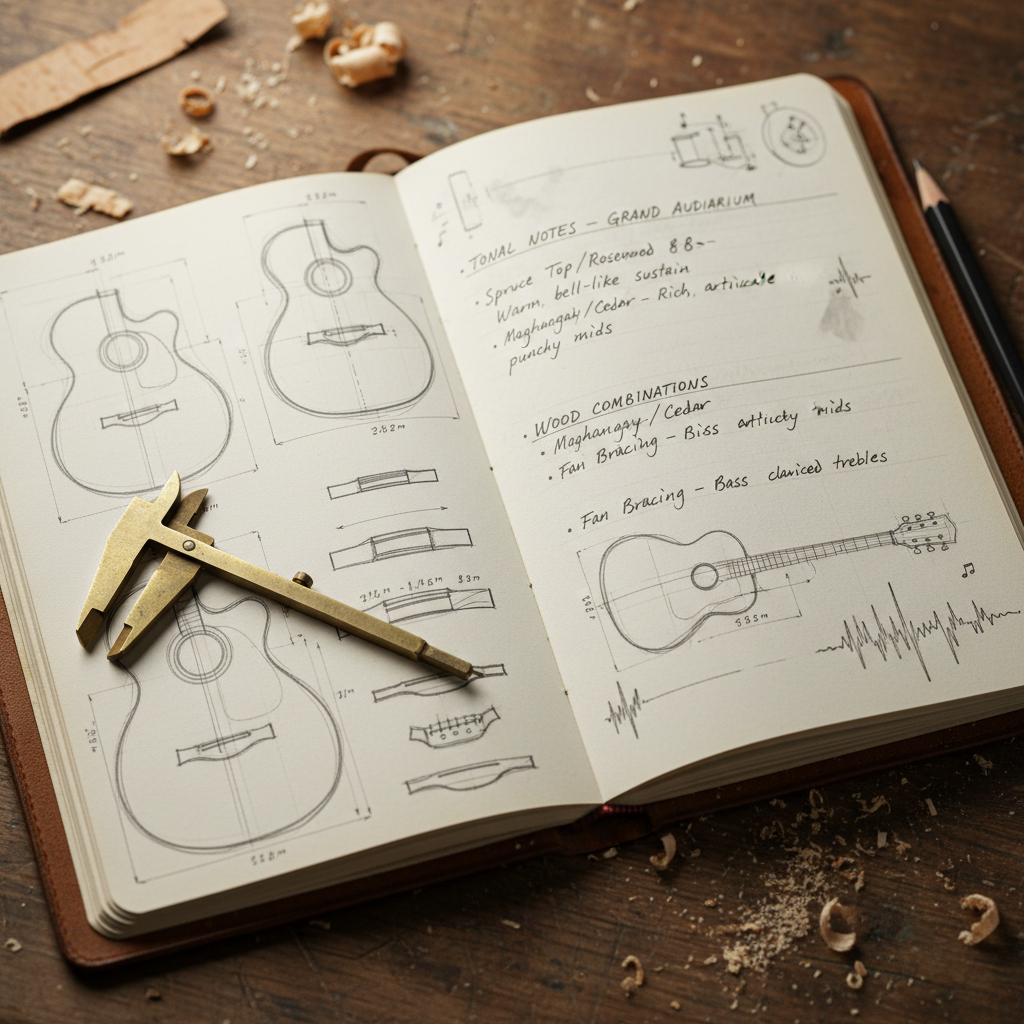
Tonewood
Wood Selection
"A spruce top selected in February will behave differently in a Nashville studio than one cut in October. I account for that."
All tops are tap-tuned individually — tapped at the nodal points, listened to, catalogued by frequency response. Backs and sides are matched for stiffness-to-weight ratio, not just figure. Necks are quartersawn within two degrees. I reject roughly forty percent of the wood I receive.
Woods sourced: Engelmann spruce, Adirondack, Brazilian rosewood (pre-CITES), Honduran mahogany
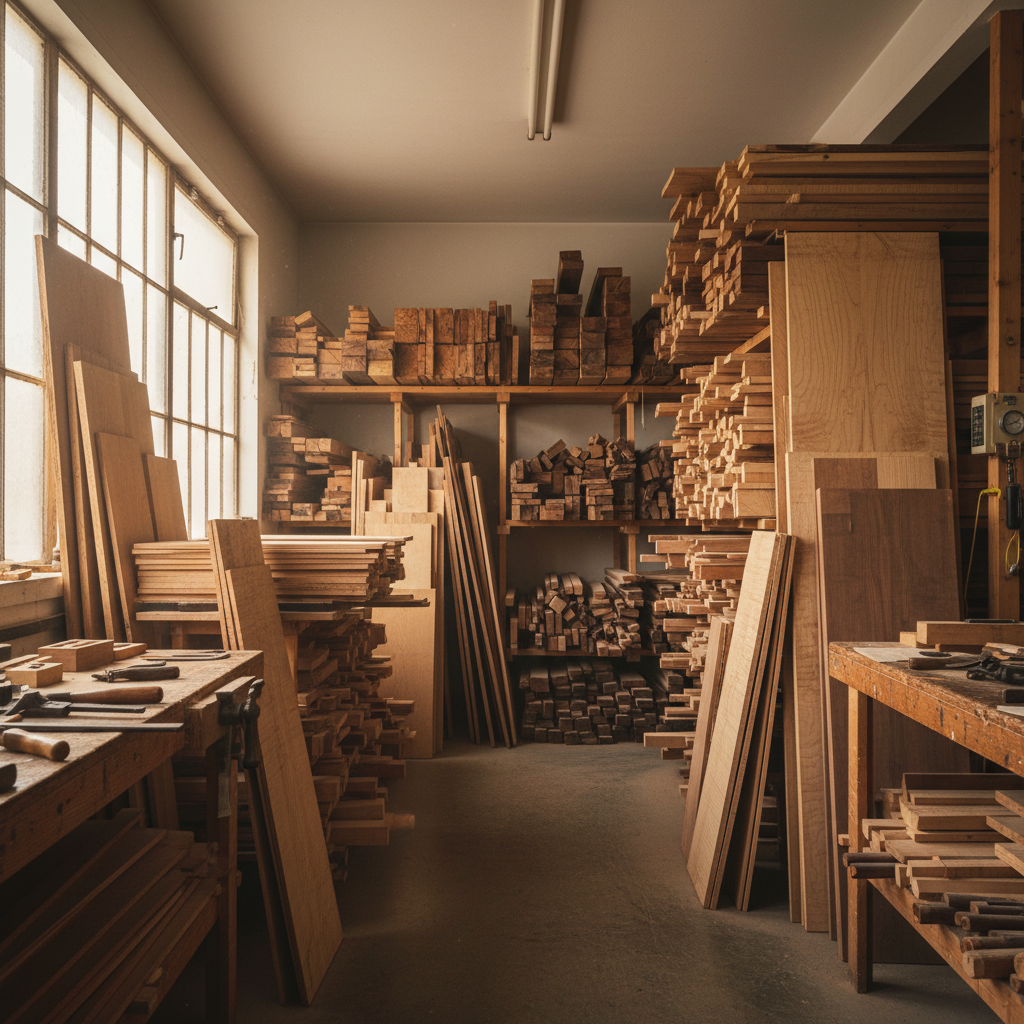
Acoustic Engineering
Voicing
"The top is a membrane. Thinning it in the wrong place by half a millimeter costs you three years of break-in. I don't leave that to chance."
Bracing is carved by hand, tested under string tension load, and adjusted until the deflection curve matches the tonal brief. I use a Chladni pattern test on every top before closing the box. The instrument must resonate before it ever reaches a string.
Brace profile accuracy: ±0.05mm | Top thickness variance: ±0.03mm
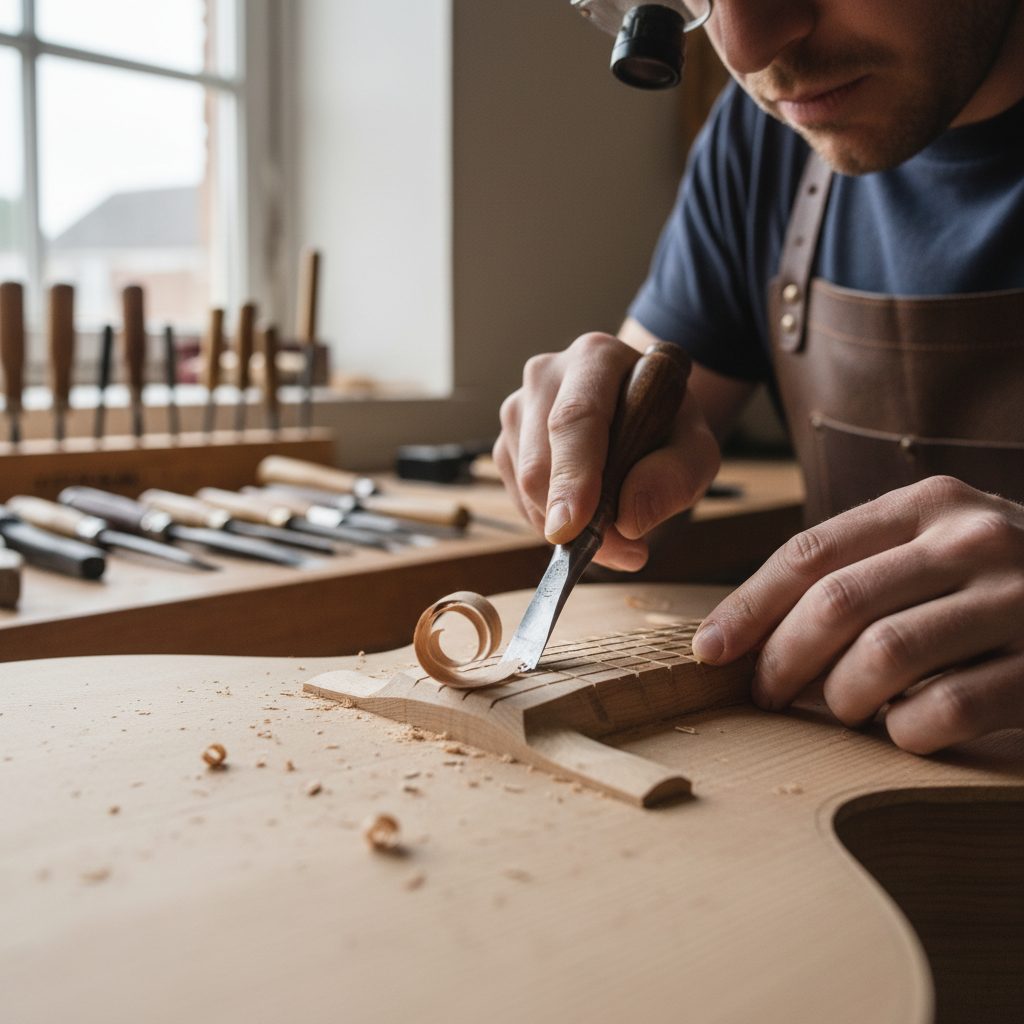
Surface Work
Finishing
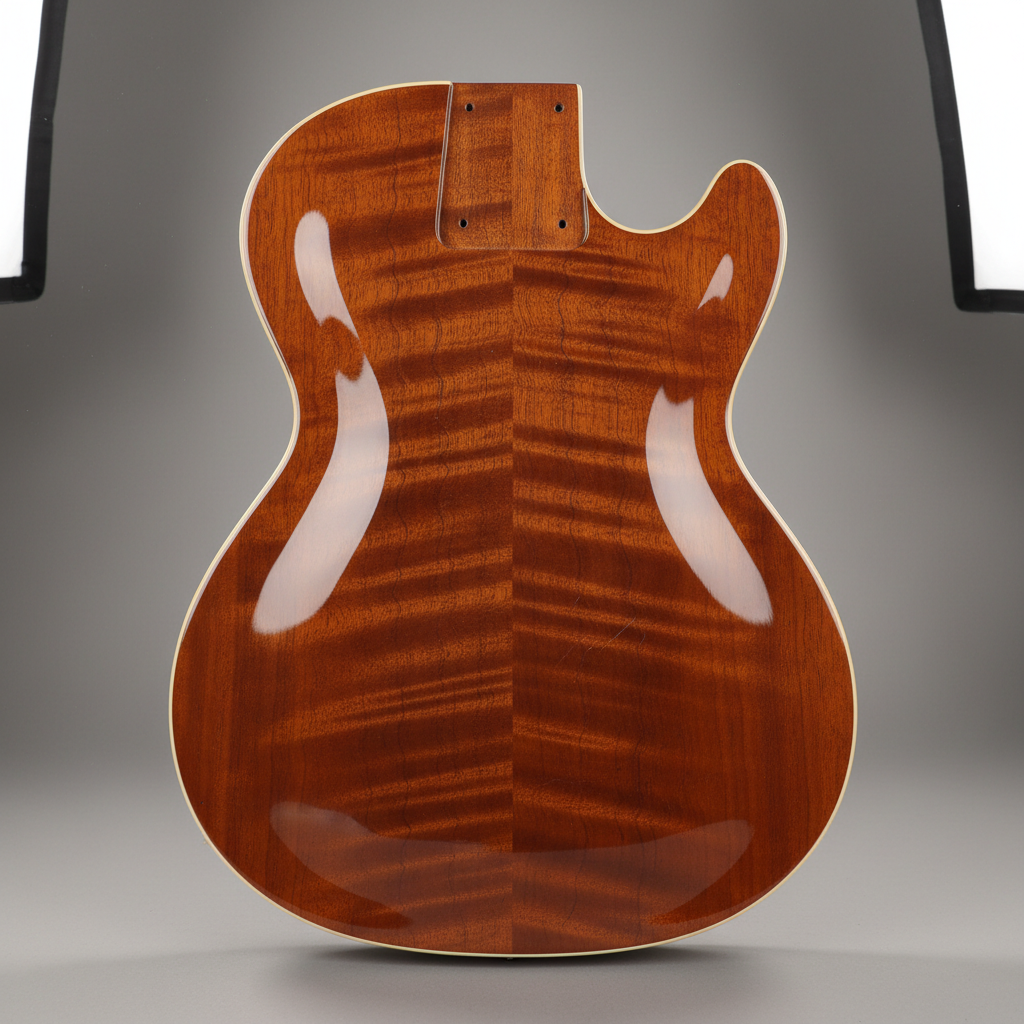
"Nitrocellulose at four to five thousandths of an inch total. Thin enough that the wood breathes, thick enough that it lasts two hundred nights."
I spray nitrocellulose lacquer in five to eight coats, sanding to P2000 between applications. No polyester filler. No UV-cure shortcuts. The final polish is done by hand with automotive-grade compound, then a dry buff. The surface should feel like the wood is still alive under your hand.
Finish thickness: 0.004–0.005″ | Cure time: minimum 90 days before final setup
Final Calibration
Setup
"The nut is cut to the thousandth. The saddle is compensated by string. The truss rod is set for your string gauge, not the factory default."
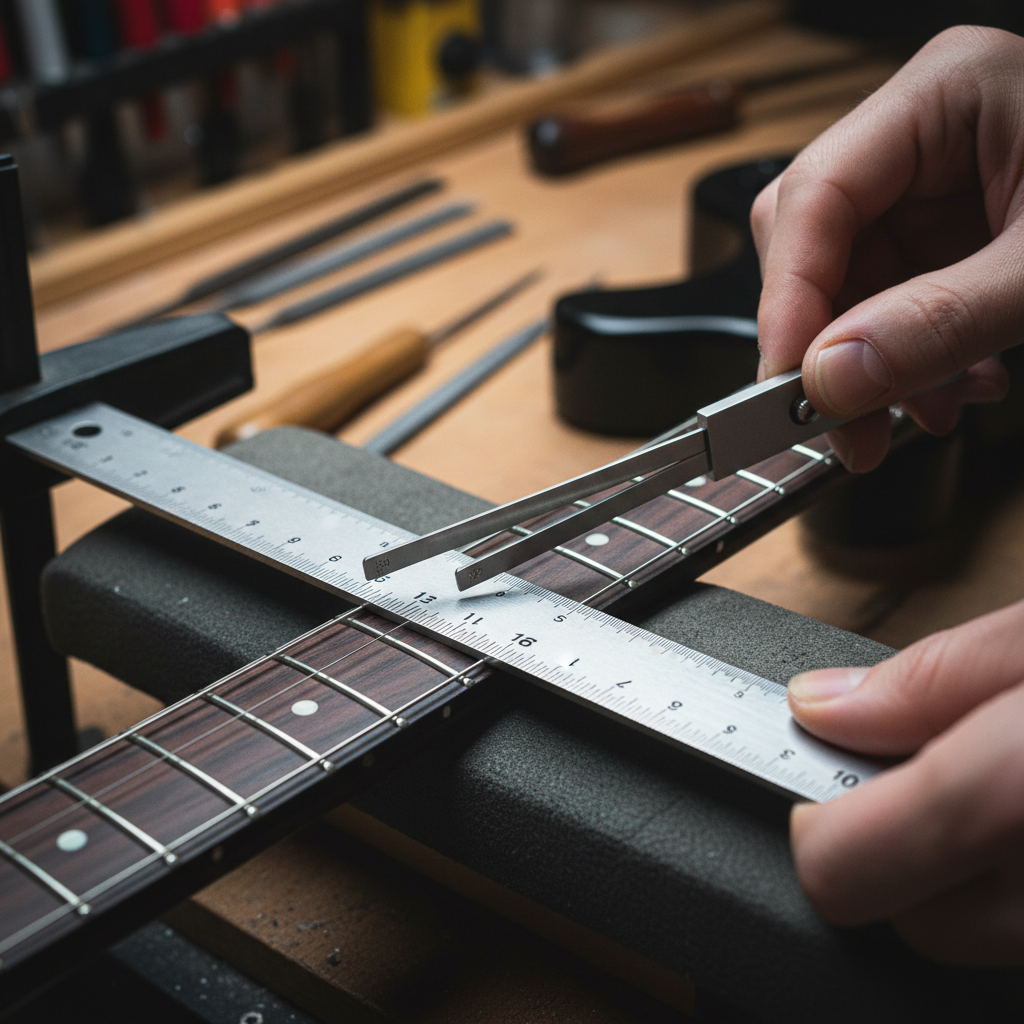
Setup is performed after full cure. Nut slots are cut to within 0.001″ of string diameter. Frets are leveled, crowned, and polished to a 32-inch radius. Action is set to the spec in the original brief, then verified under playing tension with a feeler gauge. The instrument leaves with a full documentation package: build log, tonal measurements, and setup record.
Fret level tolerance: ±0.001″ | Includes: build log, frequency response chart, setup record
Materials & Standards
The Wood Decides.
I Just Listen.
Forty percent of the wood I receive gets returned. The rest gets catalogued, tap-tuned, and matched to a build that earns it.
Engelmann Spruce
Soundboard
Lighter than Sitka, responds at lower dynamic thresholds. Preferred for fingerstyle and chamber work.
Tap tone: E2–F2 | Stiffness index: 4.8–5.2 GPa
Adirondack Spruce
Soundboard
High stiffness-to-weight ratio. Handles aggressive strumming without compression. The touring player's top.
Tap tone: F2–G2 | Stiffness index: 5.6–6.4 GPa
Brazilian Rosewood
Back & Sides
Pre-CITES stock, fully documented. Complex overtone structure. Not available in every build.
Density: 830–950 kg/m³ | CITES documentation provided
Honduran Mahogany
Neck
Quartersawn within two degrees. Stable across humidity cycles. The only neck wood I use for touring instruments.
Quarter angle: ≤2° | Moisture content at build: 7–8%
Ebony
Fingerboard
African Gabon ebony, sourced through verified FSC supply chains. Density above 1050 kg/m³ only.
Density: >1050 kg/m³ | Radius: 16″ compound to 20″
Hide Glue
Joinery
Hot hide glue at 192°F. Reverses cleanly for future repair. No instrument I build is a sealed tomb.
Gram strength: 251 | Open time: 45–60 seconds
Build Tolerances
±0.1mm
Neck profile variance
±0.03mm
Top thickness gradient
±0.001″
Fret level
±0.001″
Nut slot depth
Per string
Saddle compensation
0.004–0.005″
Finish total thickness
Client Voices
The Players
Who Know.
Three clients. Three different reasons to commission. One standard of work.
"I've played a lot of custom instruments. Most of them are pretty guitars that someone's idea of what I should sound like. This is the first one that sounds like me — specifically me, on a Tuesday, in a Nashville B room at two in the morning."
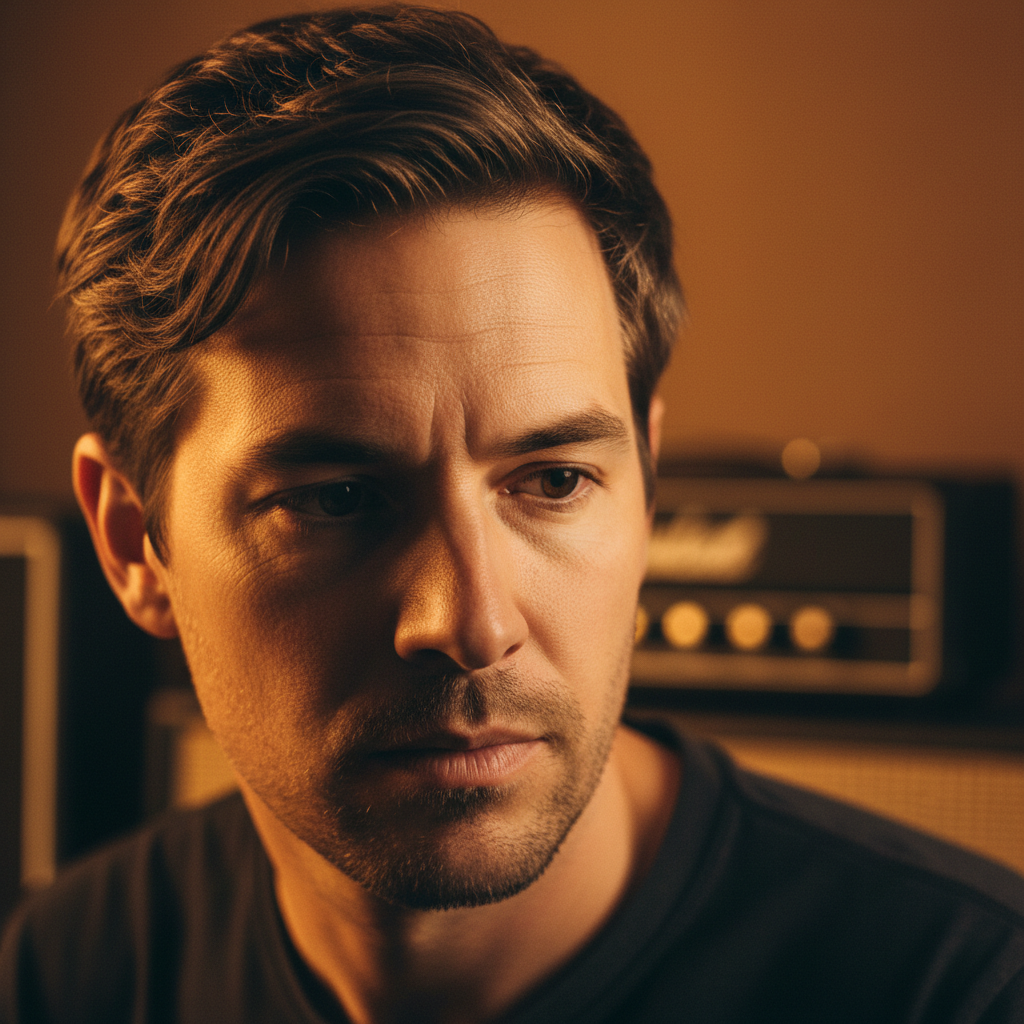
Marcus Tillman
Session guitarist · Nashville, TN
14-string harp guitar, Adirondack top, commissioned 2023
"The documentation alone is worth the commission. Build log, frequency response chart, humidity history. When I pass this to my daughter, she'll know exactly what she has. That kind of provenance doesn't exist at any price point from a production shop."

Dr. Patricia Wehr
Collector · Portland, OR
Brazilian rosewood dreadnought, heirloom commission 2022
"Two hundred and fourteen shows last year. The guitar didn't drift once. Same action in Reykjavik in January as it was in Phoenix in August. That's not luck — that's engineering."

James Okafor
Touring guitarist · Horizon Band
Mahogany OM, touring build, commissioned 2021 · 400+ shows played
Ready to Begin
The Instrument
You've Been
Describing.
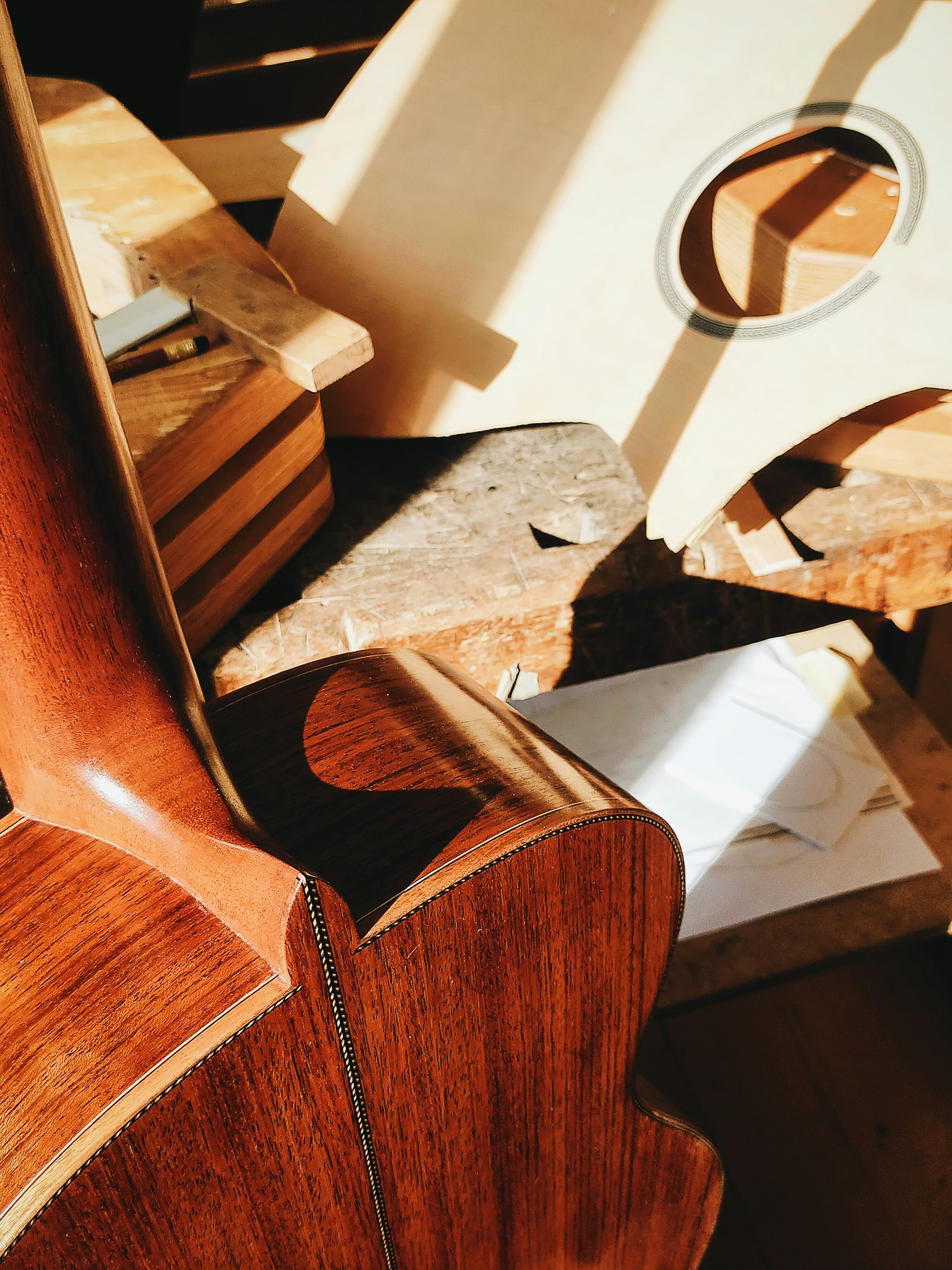
Consultations are by appointment. Lead time is currently fourteen to eighteen months. The wait is part of the process — it means the wood has time to settle too.
Portland, OR · By Appointment Only · Response within 48 hours